
Philipsburg history: town development and salt
Philipsburg history begins to make sense through its setting between Great Bay and Great Salt Pond. The town is the capital of the Dutch side of St. Martin, with a waterfront Boardwalk and Front Street among the places a visitor encounters today. Looking beyond the shops and beach brings salt production, migration and changing public institutions into the visit.
The official tourism account links the town's development to John Philips, salt production and immigration. It describes Philips as an Englishman under Dutch command. Rather than building the visit around a single founding date, follow the relationships between the town, the pond and the historical subjects presented in the museum. This gives the familiar waterfront a broader context without reducing the place to a founder story.
Start with the Philipsburg overview if you are still choosing your route through town. For a historical visit, separate a walk along Front Street, time in the Sint Maarten Museum and any journey to a fort. Each has its own practical arrangements, and a view of the town does not replace time spent understanding its history.
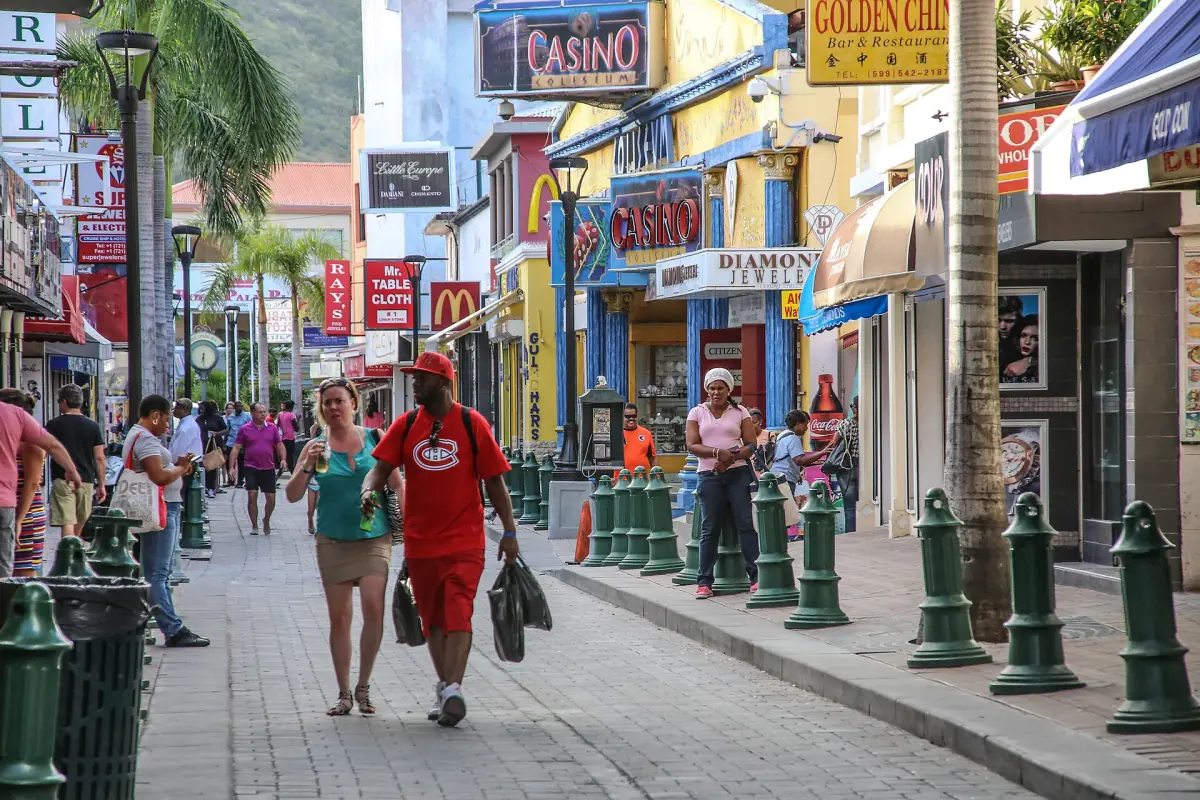
Salt, enslavement, emancipation and migration
The Sint Maarten Museum lists salt industry, enslavement, emancipation, plantations and migration among its exhibition subjects. These themes provide a way to look at economic activity alongside the lives of the people involved. Make time for this part of the visit rather than treating the town's past only as a sequence of buildings and military names.
The museum also lists pre-Columbian history, flora and fauna, and Hurricane Luis among its subjects. Choose the areas that interest you while allowing time for the connections between them. For a visitor starting with the salt pond's place in the townscape, migration and the salt industry offer useful questions to carry into the museum. The listed subjects are a starting point for the visit, rather than a promise about an individual object on display.
A separate Carnival-history experience offers another cultural focus, with a guide and access to a local art gallery. Keep that booking distinct from your Sint Maarten Museum plan and from a visit to either fort. Choose the experience for its Carnival subject rather than as a complete survey of the island's past.
Explore carnival history
This separate experience introduces Caribbean carnival history with an experienced guide.
Hand-picked tours, booked through Viator. Prices are indicative starting prices in US dollars (as of November 2026). Tap a tour for live availability and the current price in your currency.
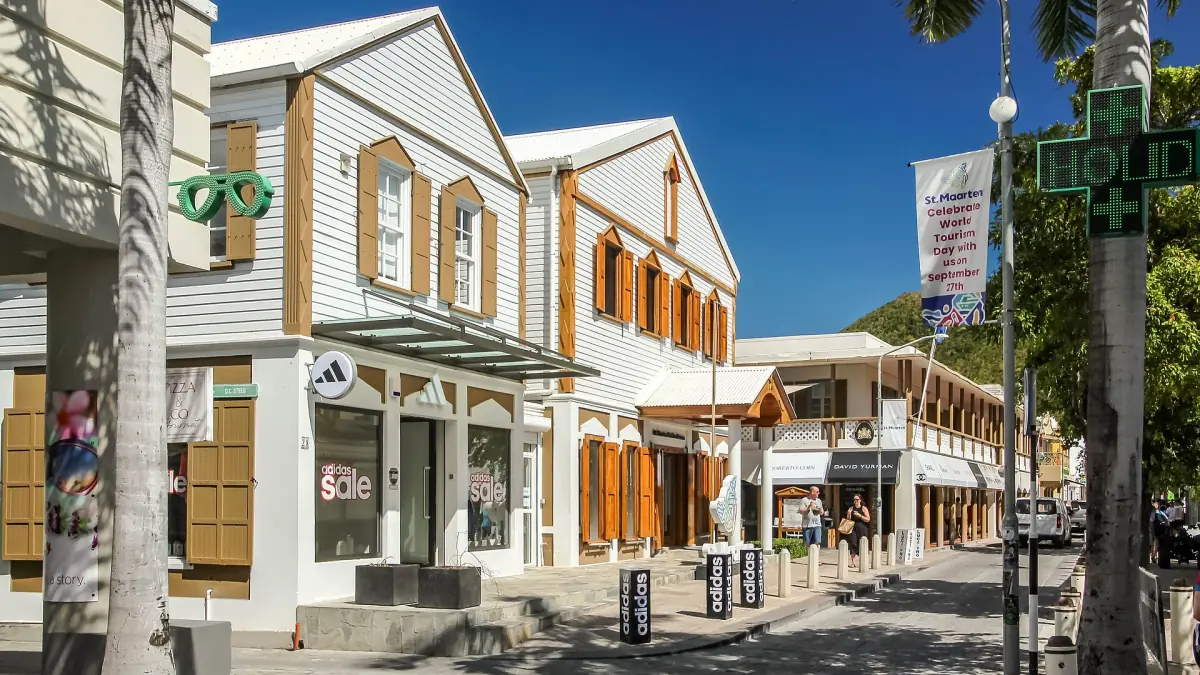
Explore Carnival history as a separate experience
This guided Carnival-history activity includes gallery access and complements a town visit with its own cultural focus.
Fort Amsterdam between Great Bay and Little Bay
The museum foundation dates the first Dutch fortification at this site to 1631. It explains the visible remains through Spanish rebuilding and later Dutch alterations under John Philips. Think of the site as the result of several phases rather than assigning everything you see to the first construction. The foundation places the end of military operations in 1874.
For a visit, the described approach goes through resort grounds in Little Bay, where visitors register their purpose at the entrance before following the signs. Arrange access for your visit rather than treating the grounds as an unrestricted public passage. Combine this with realistic transport planning from town, using the transport guide for the broader arrival and road context.
Fort Willem and Fort Hill
Fort Hill, also called Signal Hill or Fort Willem Hill, is a different historical site from Fort Amsterdam. The museum foundation describes the British Fort Trigge from 1801, later names including Fort Gelderland and Fort Louis Napoleon, and the name Fort Willem I from 1816. Military use continued until 1846, followed by a signal-post role and eventual abandonment.
Keep those names together when reading about Fort Hill, and keep them separate from the Great Bay and Little Bay fort. Treat this as historical orientation when planning your time. For an organised journey beyond the centre, compare island tours by their actual route rather than assuming a historic name makes a site part of an itinerary.
The Courthouse on Front Street
The Courthouse is a useful focus for a Front Street walk. The museum foundation describes its civic functions, including a council chamber, police quarters, a prison and a weighing room. These public roles give a clear reason to include the building in a visit concerned with the town's institutions. View it in that context rather than relying on a story about a founder's private residence.
Visiting the Sint Maarten Museum
The museum is at Front Street 7, with approaches described from Front Street and the Boardwalk. On its undated website, accessed on 10 November 2026, the operator lists Monday to Friday, 10:00 to 16:00, with Saturday and Sunday closed. Check arrangements for your intended date, particularly around official festive dates, and ask about admission when organising the visit.
The separate Carnival activity lasts 45 minutes and includes a guide, local art-gallery access and photo opportunities with Carnival costumes. It is its own experience, with its own booking arrangements. Leave room between activities and use the weather planning guide when combining indoor visits with outdoor town stops.
History visit questions
Are Fort Amsterdam and Fort Willem the same place?
They are separate sites. Fort Amsterdam lies between Great Bay and Little Bay; Fort Willem belongs to the history of Fort Hill, also called Signal Hill.
Where is the Sint Maarten Museum?
It is at Front Street 7 in Philipsburg. The operator's undated page, accessed on 10 November 2026, lists weekday hours of 10:00 to 16:00 and closure at weekends.
What does the Carnival experience cover?
It is a separate guided Carnival-history activity with gallery access and costume photo opportunities. Plan the Sint Maarten Museum and any fort visit separately.